.jpg)
Every creative project starts with exploration. You paste a script into an AI voice generator and create the first read. The pacing feels a little rushed, so you slow it down. After hearing the opening aloud, another voice feels like a better fit for the message. One sentence sounds awkward, so you rewrite it and generate a new version. Then you listen again.
That’s how great voiceovers come together.
Each of those decisions contributes to the final recording. Professional voiceover takes shape through comparison, revision, and refinement before the audio is ready for an audience.
As we looked at how businesses create training, marketing videos, product demos, and customer content in WellSaid, one thing became clear. Teams need room to test ideas, gather feedback, and improve each recording as the project develops. We built our standard AI voice plans around that workflow.
That’s why our standard plans pair unmetered generations with downloaded minutes. Teams can create and refine voiceover throughout the review process, while usage reflects the audio they ultimately choose to download.
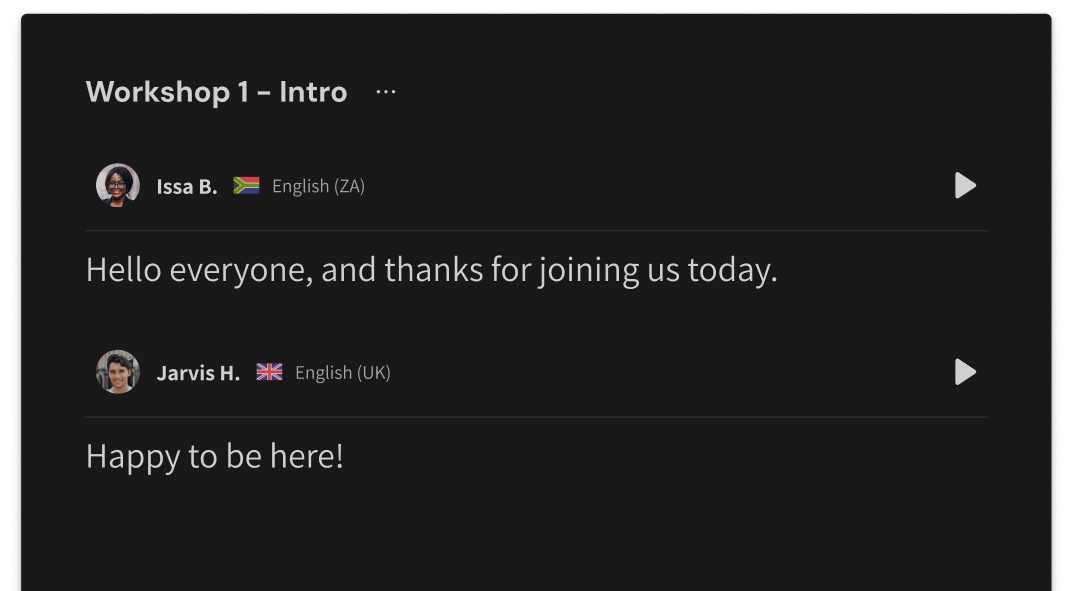
Great voiceovers are built through iteration
Professional voiceover rarely ends after the first read. Scripts evolve, delivery changes, and the creative direction becomes clearer with every review.
Consider a customer onboarding video that’s ready for its first recording. The script has already been approved, but hearing it aloud reveals a few opportunities to improve it. You compare options from the WellSaid AI voice library until you find one that better matches the tone of the message. Every voice begins with a professional voice actor recorded in studio, giving your team a strong foundation for refining pacing, pronunciation, and emphasis.
Two product names need additional emphasis, which you adjust with Smart Toolbar. You slow the pacing before the closing call to action. After a final review with the project team, the recording is ready to publish.

A typical AI voice workflow looks something like this:
- Draft the script
- Generate the first voiceover
- Listen and review
- Revise the wording
- Compare different voices
- Adjust pronunciation, pacing, or emphasis
- Share a draft for feedback
- Download the approved audio
Each step moves the project forward. Comparing voices, refining delivery, and incorporating feedback help teams produce audio that accurately represents their business and message.
Voiceover production is a process, not a single generation
Business teams rarely complete a voiceover in one pass.
Marketing teams may compare several voices before choosing one for a campaign. Product marketers revise scripts as messaging develops ahead of a launch. Learning teams return to existing projects when policies, products, and terminology change.
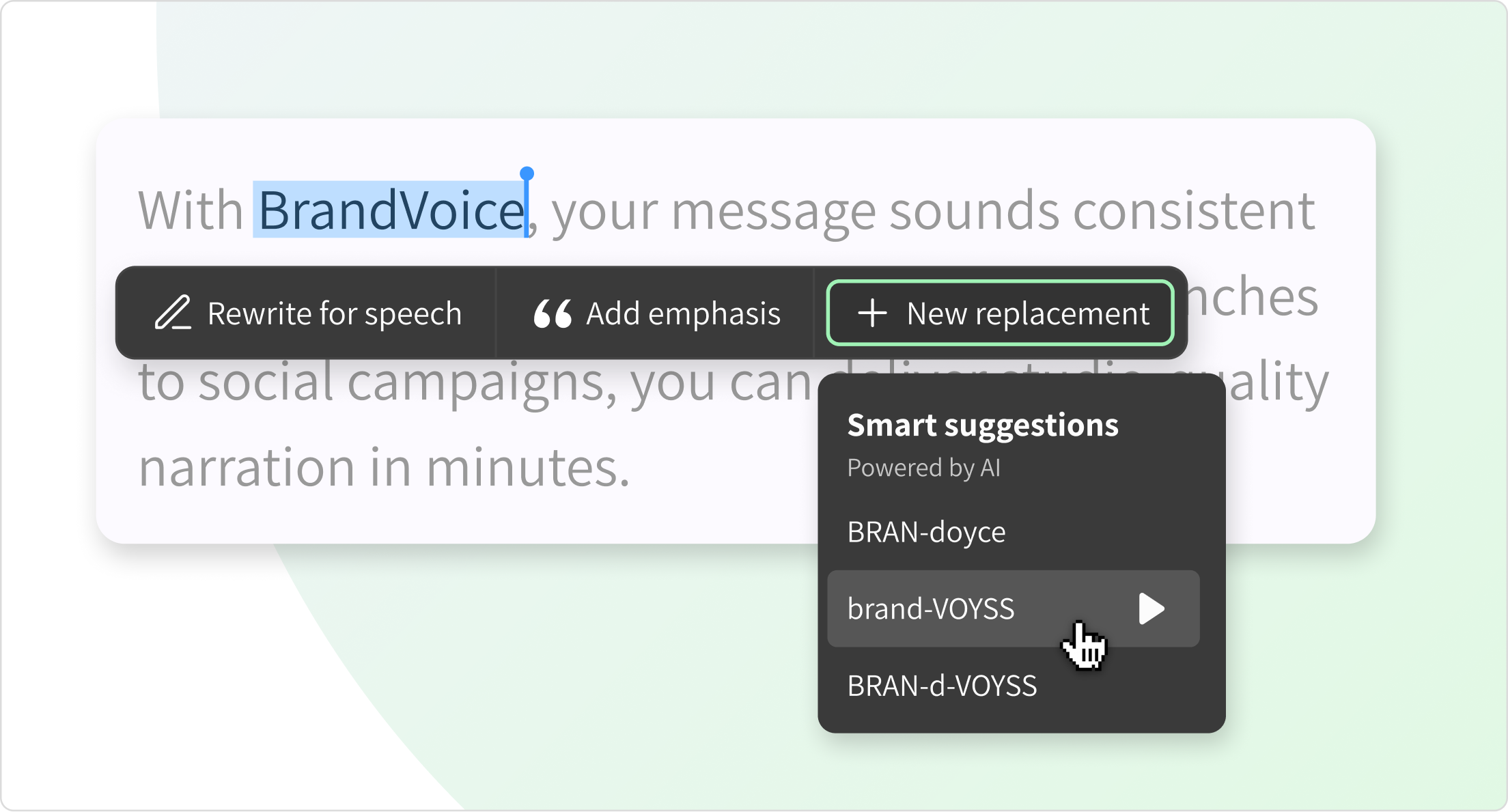
Those workflows shaped the way we built WellSaid. Teams can explore voices, refine pronunciation and emphasis with Smart Toolbar, keep terminology consistent with the phonetic library, test different deliveries with emotional presets, and review drafts together before downloading the final recording.
Unmetered generations give teams room to make those decisions throughout production. Generated audio helps teams evaluate their options throughout production, while downloaded minutes reflect the recordings selected for use.
Pricing should reflect the finished result
Businesses use WellSaid to create audio for training programs, campaigns, product experiences, and customer communications. Before that audio is published, it may move through creative reviews, subject matter experts, brand teams, or legal approval.
A product name may need clearer emphasis. The delivery may need to feel more conversational for a customer audience. A reviewer may request a script update. Another voice may better suit the final direction.
Each decision improves the recording that reaches the audience.
Our standard AI voice plans measure usage in downloaded minutes because a download represents audio the team has chosen to use. Unmetered generations provide the creative freedom to reach that point.
How downloaded minutes work in practice
A generated preview helps a team assess the script, voice, and delivery. A download represents audio the team is ready to move into production.
That distinction gives businesses a clearer way to manage voiceover across departments, campaigns, and content libraries. Teams can continue refining recordings while tracking usage based on the audio they approve.
With WellSaid, available minutes are applied when audio is downloaded, so teams can generate, compare, and refine recordings throughout the review process.
The result is a model aligned with the way businesses work: explore ideas, collaborate on revisions, and track the audio that becomes part of the final project.
The workflow looks different across business teams
The path to approved audio depends on the team, content, and review requirements.
Some projects move from script to download in a few reviews. Others involve subject matter experts, brand stakeholders, or legal teams. Existing recordings may also need updates as products, policies, and messaging evolve.
Unmetered generations give teams the flexibility to follow the process each project requires. Downloaded minutes provide a practical way for the business to plan around the audio it publishes and uses.
Better workflows produce better voiceover
Strong voiceover workflows make it easy to compare ideas, incorporate feedback, and maintain quality across projects.
An instructional designer updating compliance training might adjust pronunciation with Smart Toolbar, use the phonetic library to maintain terminology across modules, and share the revised project with subject matter experts before publishing. A marketing team might compare voices and emotional presets before choosing the delivery that best supports the campaign.
Every team has its own process, but the pattern is consistent: create, refine, review, and publish.
A flexible workflow gives businesses more control over the details that shape each recording. Teams can involve the right reviewers, maintain consistency across content, and use downloaded minutes on audio that’s ready for its intended audience.
Built for how businesses create voiceover
We built our standard AI voice plans around the audio teams choose to use. Unmetered generations support the work from the first read-through to stakeholder approval. Downloaded minutes reflect the recordings that move into training, campaigns, product experiences, and customer communications.
That structure gives businesses room to refine recordings while keeping usage tied to meaningful output.
Great AI voiceovers come from the decisions teams make throughout the review process, from choosing the right voice to refining the final delivery.
Bring a real project into WellSaid, explore different approaches, and refine each recording until it's ready for your audience. That's the workflow our standard AI voice plans are built to support.


.jpg)
.avif)