.avif)
Key takeaways
- Not all text-to-speech tools are created equal for commercial use; quality, licensing, and rights matter.
- Commercial TTS requires clear licensing that explicitly allows business and revenue-driven applications.
- High-quality voices with natural sound increase audience engagement and professionalism.
- Features like voice customization, language support, and export options enhance usability for different projects.
- Evaluating security, data privacy, and platform reliability protects businesses when using TTS at scale.
Text-to-speech now powers narrated training, internal communications, and customer-facing content across modern organizations. Teams publish updated voiceovers in minutes rather than weeks, which keeps learning libraries, onboarding flows, and product education current without studio bottlenecks. Commercial standards now focus on rights ownership, workflow integration, voice consistency, and auditability across every stage of spoken content creation.
This guide evaluates enterprise AI voice platforms alongside popular creator tools. The focus stays on tangible business outcomes rather than novelty features.
What is text-to-speech?
Text-to-speech converts written scripts into spoken audio through speech synthesis models trained on human voice recordings. Modern voice generation systems manage pronunciation, pacing, and emphasis to produce finished audio files that replace traditional recording workflows.
Text-to-speech reader apps support individual listening needs. Commercial-ready AI voice generators support content production across teams with licensing, workflow controls, and compliance safeguards.
What does “commercial use” mean in text-to-speech?
Commercial text-to-speech supports monetized, customer-facing, or regulated content. This includes employee training programs, marketing assets, onboarding experiences, product education, and customer support workflows that represent a brand in the market.
Commercial readiness depends on licensed voice ownership, documented usage rights, and auditable workflows that withstand legal, security, and procurement reviews.
What “best text-to-speech” means in 2026
Business buyers now evaluate AI text-to-speech software through the lens of accuracy, reliability, and operational fit rather than surface-level voice quality.
Natural, human-like AI voices
Modern AI voice text-to-speech sounds realistic when models reproduce cadence, pacing, and breath patterns that match natural delivery. Emotional neutrality matters in training, compliance, and customer education, where clarity outweighs dramatic expression.
Short demos rarely reveal whether voices hold up across long scripts. Full training modules, onboarding programs, and internal communications expose weaknesses quickly when voices drift or lose rhythm.
Protect commercial usage rights
Rights-cleared datasets define the risk profile of any text-to-speech platform. Systems trained on contracted voice talent provide documented ownership that holds up when narration appears in training programs, marketing campaigns, and customer education libraries.
Scraped sources and permissive cloning features create uncertainty around who controls the resulting audio. That uncertainty compounds once narrated content moves into public-facing channels or regulated environments.
Once ownership is clear, teams run into the next bottleneck: turning approved scripts into published narration without breaking the content pipeline.
Build workflow-ready voice systems
Teams judge value in how quickly scripts become publishable audio. Edits should flow into refreshed narration without manual file handling or tool hopping. Platforms that connect directly to CMSs, LMSs, video editors, and authoring tools turn spoken content creation into a predictable step within existing content pipelines.
Bulk updates and version tracking support programs that refresh continuously, from policy training to product walkthroughs.
Power digital products through automation
Modern organizations embed speech synthesis directly into onboarding experiences, help centers, and customer support tools. APIs allow product teams to trigger audio production inside applications rather than exporting files by hand.
Automation links script changes to narration workflows, version control, and publishing so updates reach users without production delays. This layer separates operational voice platforms from basic text-to-speech generators.
Map the spoken content lifecycle
Large teams follow a repeatable pattern when producing narrated content at scale. Writers draft scripts, reviewers approve language, systems generate audio, and teams publish updates into training libraries or customer portals. Scheduled refresh cycles keep content aligned with policy, product, and regulatory changes.
Platforms that track every revision reduce rework while keeping spoken content consistent across departments.
Operate with enterprise safeguards
Audit logs show who created or updated narration for HR policies, compliance modules, or regulatory training. Role-based access keeps sensitive scripts limited to approved reviewers, which reduces risk as spoken content moves across teams and systems.
IT and legal stakeholders now lead many evaluations because narration workflows touch internal policy, customer education, and regulated material. Platforms that publish clear auditability standards move through procurement faster and scale with less friction.
Commercial readiness checklist
Use this to filter tools before diving into features:
- Rights-cleared narration models
- Audit logs for every change
- Private or closed-source architecture
- Shared pronunciation library
- APIs for automation and product embeds
Platforms that miss even one of these tend to stall once narration leaves experimentation and enters real customer-facing use.
The 8 best text-to-speech generators for commercial use
The platforms below reflect how business teams apply AI text-to-speech in real production environments. Each tool is evaluated on production readiness, rights ownership, workflow fit, and governance rather than consumer features. Use the checklist above as you compare the different software in the table below.
1. WellSaid text-to-speech generator
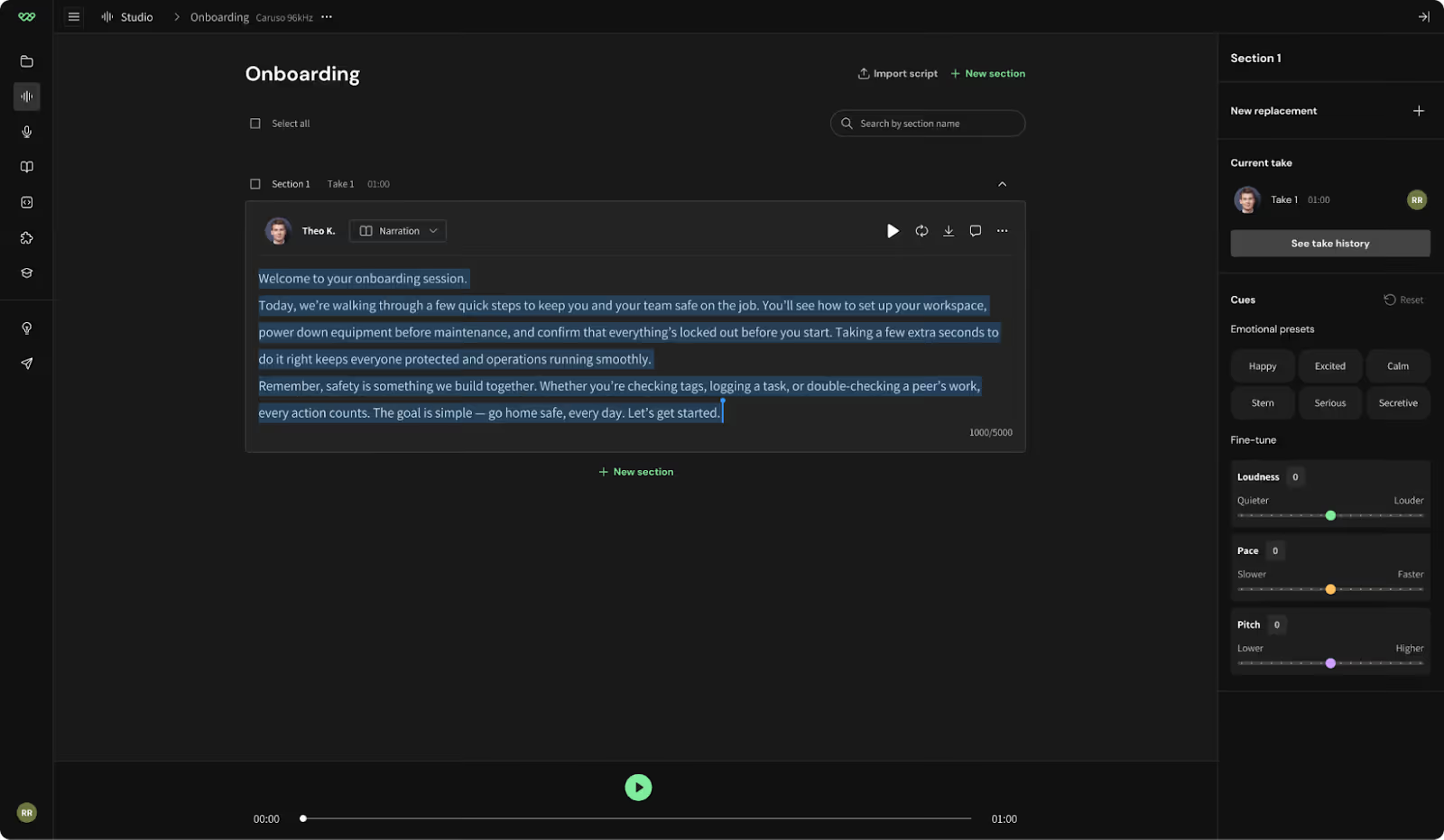
WellSaid supports organizations that treat AI text-to-speech as part of everyday operations rather than one-off projects. Fortune 500 teams in healthcare, higher education, financial services, and manufacturing rely on the platform when narrated training, policy updates, and customer education carry legal and reputational risk.
Best for: learning and development teams, corporate training programs, internal communications, marketing, regulated enterprises
Create realistic AI-generated voices for business
WellSaid Studio is built around rights-cleared models recorded with contracted voice talent. These AI-generated voices preserve natural speech patterns, pacing, and emotional cues across long scripts, which helps teams scale audio content without sacrificing clarity or tone. The result is consistent narration across onboarding programs, safety training, and customer education libraries.
Maintain pronunciation accuracy across libraries
A shared pronunciation library stores product names, technical terminology, and regulated language so updates never reintroduce old errors. This control layer improves pronunciation accuracy at scale and lets teams regenerate narration directly inside the AI voice generator Studio workflow, rather than exporting files across tools like Google Docs or managing drafts in Google Drive.
Support multiple voice styles and global programs
WellSaid offers more than 120 AI voices spanning accents, voice styles, and professional speaking tones. Multinational teams use these multilingual voices to publish localized audio content while maintaining consistent delivery across regions and markets.
Collaborate across departments on spoken content
Large organizations rarely create narrated content in isolation. WellSaid helps teams of reviewers, instructional designers, and marketers collaborate inside the same review-to-publish flow, shortening approval cycles when scripts change or compliance teams flag updates.
Trust enterprise deployment for regulated environments
WellSaid runs inside a private, enterprise-grade architecture built on rights-cleared datasets, with SOC 2 Type II alignment, GDPR documentation, and moderation layers that limit misuse. Teams rely on this foundation when publishing HR, compliance, safety training, and corporate training programs, where auditability and risk controls matter.
Automate audio production inside digital products
For product and engineering teams, the WellSaid text-to-speech API connects narration directly to applications and content systems. API credentials allow teams to trigger voice synthesis automatically whenever scripts update, delivering finished audio in standard audio formats such as an MP3 file for downstream publishing.
Together, these capabilities position WellSaid as a business-ready text-to-speech generator built for high-volume narration workflows where ownership, auditability, and consistency matter as much as audio quality.
2. Murf
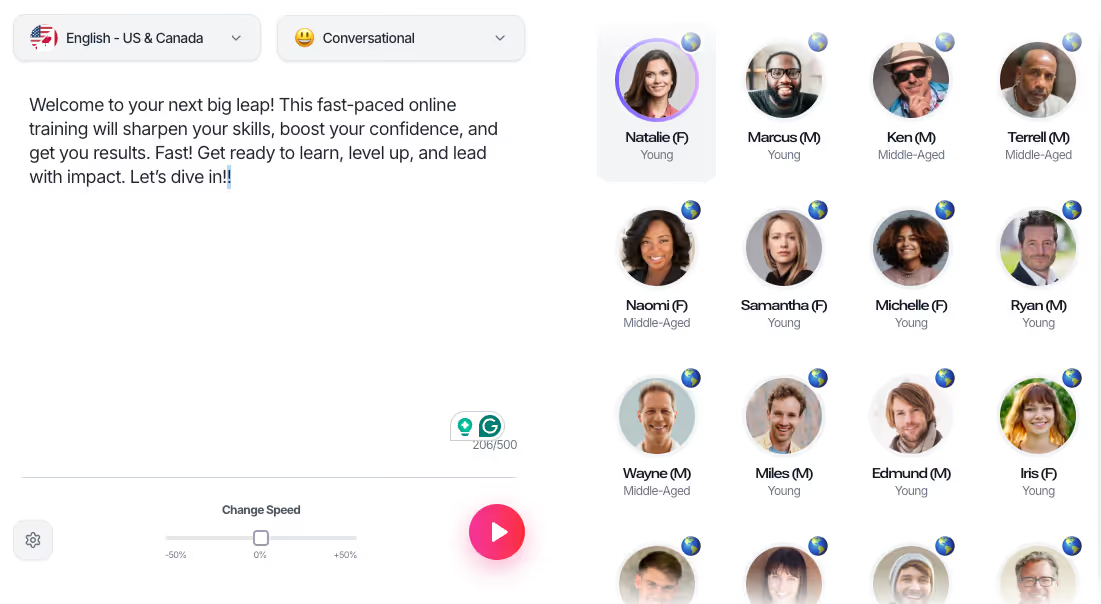
Murf AI text-to-speech focuses on accessible capabilities for marketing teams and content creators who need fast turnaround on short-form projects. The platform emphasizes ease of use over deep governance controls.
Best for: SMB marketing teams, explainers, internal video updates
Strengths
- Intuitive interface that speeds up voice creation
- Broad selection of AI voices for short content
- Flexible subscription plans
Limitations
- Limited controls for regulated or high-risk environments
- Lacks private architecture for sensitive workflows
3. ElevenLabs

ElevenLabs focuses on expressive delivery and advanced voice cloning. The product appeals to creators working in entertainment and narrative formats.
Best for: audiobooks, gaming projects, creator-led storytelling
Strengths
- High emotional range in generated voices
- Voice cloning tools for custom character voices
- APIs for experimentation and prototyping
Limitations
- Voice cloning introduces rights and IP exposure
- Minimal compliance documentation for business deployment
4. Descript
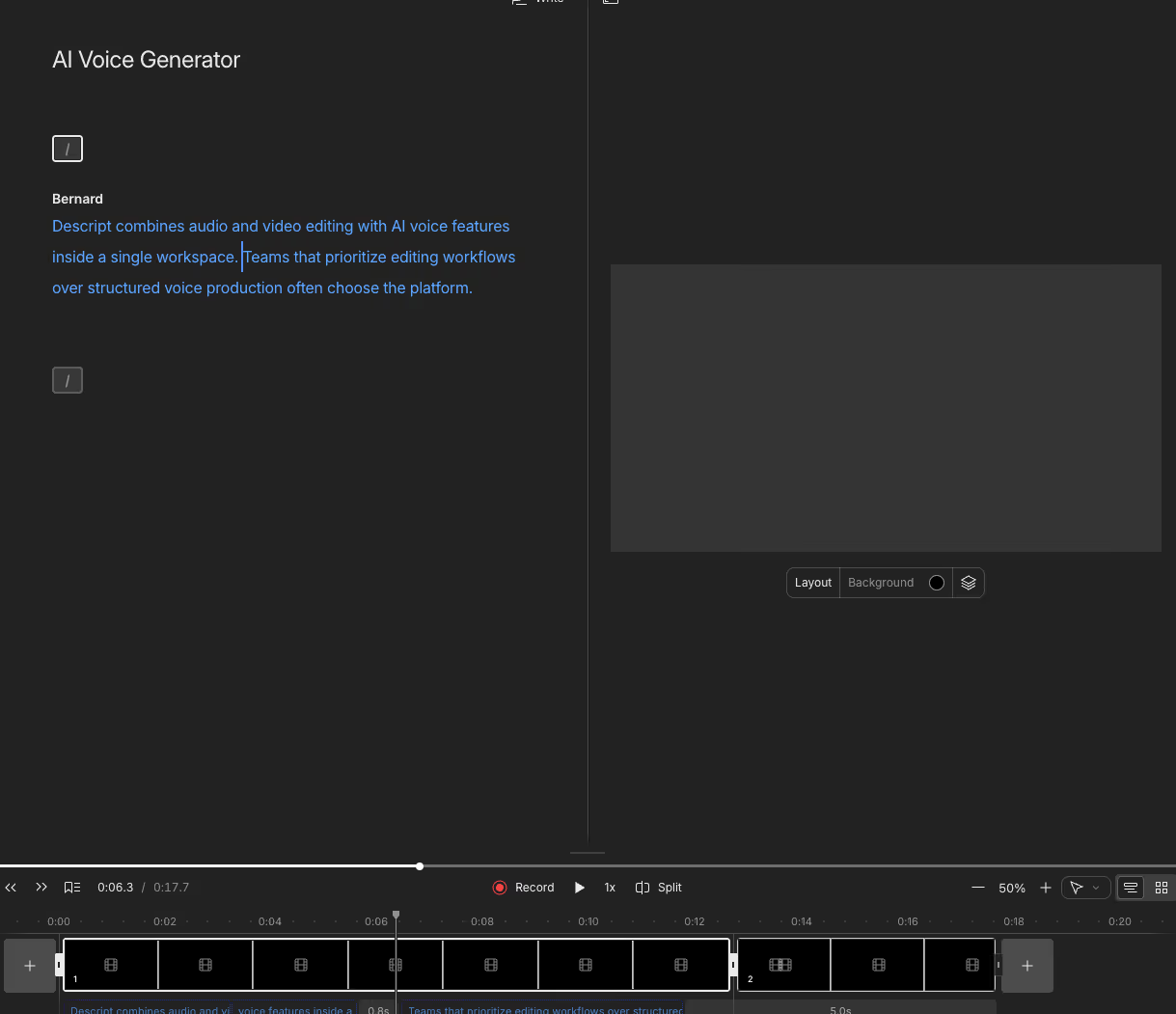
Descript blends audio and video editing with text-to-speech features in a single workspace. Teams focused on editing efficiency often adopt the platform.
Best for: podcasting teams, video editors
Strengths
- Integrated editing environment for audio and video
- Rapid revision workflows
- Collaboration features for distributed teams
Limitations
- Voice generation is not the primary product focus
- Lacks enterprise governance controls
5. Speechify
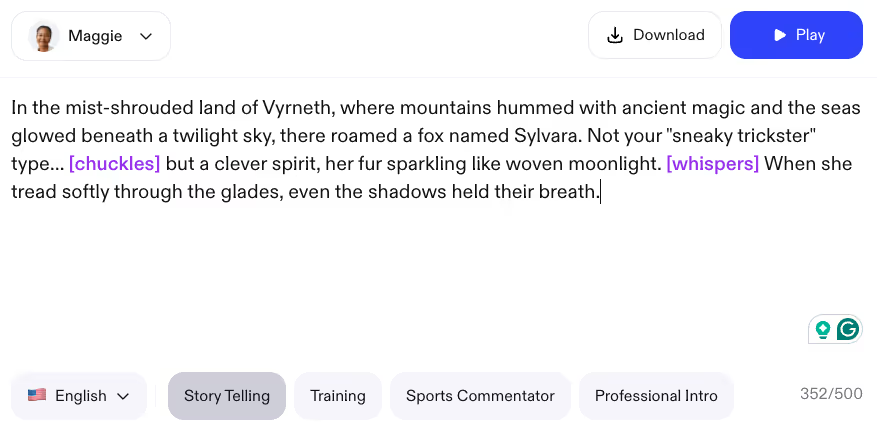
Speechify centers on accessibility and personal productivity use cases. Tools such as Speechify Studio and the Speechify AI voice generator convert text into spoken audio for everyday reading and learning.
Best for: individual users, accessibility-driven education
Strengths
- Strong accessibility features for reading support
- Simple text-to-speech interface
- Broad consumer adoption
Limitations
- Consumer-grade platform architecture
- No formal framework for regulated commercial use
6. Amazon Polly

Amazon Polly provides scalable AI text-to-speech through AWS APIs. Product teams use it to embed voice into applications, support tools, and automated workflows.
Best for: engineering teams building large-scale voice features
Strengths
- Cloud-native speech synthesis APIs
- Supports automated voice generation pipelines
- Integrates directly into AWS ecosystems
Limitations
- Infrastructure-led product with limited content production tooling
- No built-in pronunciation libraries or review workflows
7. Google Cloud Text-to-Speech
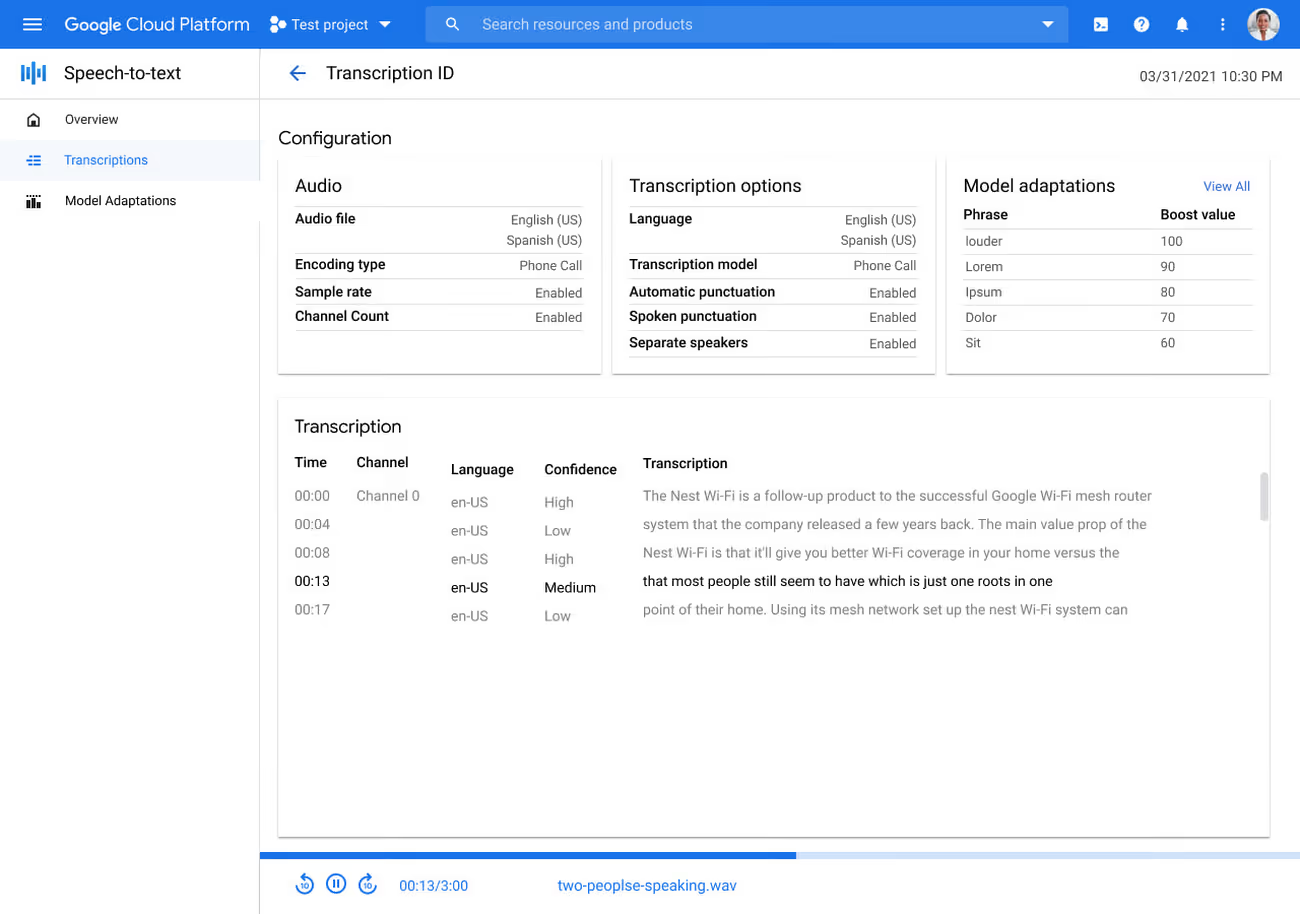
Google Cloud Text-to-Speech delivers neural speech synthesis through Google Cloud APIs. Teams adopt it to power digital products and automated voice services.
Best for: product teams already operating on Google Cloud
Strengths
- High-performance neural voice generation
- Strong developer documentation and SDKs
- Global language coverage
Limitations
- Built for infrastructure rather than content teams
- Lacks governance tooling for training and marketing workflows
8. Microsoft Azure Text-to-Speech

Azure Text-to-Speech integrates into Microsoft’s cognitive services platform. Enterprises in the Microsoft ecosystem use it to build voice into applications and internal tools.
Best for: enterprises standardizing on Microsoft Azure
Strengths
- Enterprise-grade cloud infrastructure
- Broad language and locale support
- Tight integration with Azure services
Limitations
- Developer-centric rather than content-centric workflows
- Limited built-in tools for managing large voice libraries
How cloud TTS APIs fit into commercial stacks
Amazon Polly, Google Cloud Text-to-Speech, and Microsoft Azure Text-to-Speech operate at the infrastructure layer. Engineering teams use them to add speech synthesis to applications, portals, and automated services.
Commercial voice systems sit higher in the stack. They support script review, pronunciation management, version history, publishing workflows, and cross-team collaboration. Many organizations evaluate cloud APIs and enterprise voice platforms side by side because they address different parts of the audio production lifecycle.
Once teams understand the difference between infrastructure APIs and production platforms, the next decision usually comes down to cost.
Free vs paid text-to-speech software
Free text-to-speech tools work for testing ideas, but they break down quickly once audio moves into customer-facing or regulated workflows.
Where free tools fall short
- Unclear commercial rights: Many free platforms rely on scraped voice data or permissive terms that limit how generated audio can be used. Teams often publish training or marketing content without proof of ownership, which introduces legal exposure later.
- Opaque data handling: Free tiers rarely disclose how scripts are stored or retained. Without private architecture or published security practices, sensitive content can pass through systems with minimal safeguards.
- Quality ceilings: Length caps, restricted voice libraries, and throttled processing show up fast in long-form training or bulk updates. These constraints slow production and lead to inconsistent audio libraries.
- No path through procurement: Free tools typically lack SOC 2 reports, GDPR documentation, or service agreements, which stalls deployment in regulated environments.
The risks of using consumer TTS tools for business
Consumer text-to-speech readers solve personal productivity needs. Applying them to business workflows creates avoidable risk.
- Deepfake exposure: Unrestricted voice cloning and minimal moderation make it easy for audio to be reused or misrepresented outside its original context.
- IP uncertainty: Models trained on scraped or user-submitted data blur ownership boundaries. That uncertainty becomes costly once narration appears in public campaigns or compliance programs.
- Blocked in regulated industries: Healthcare, finance, aviation, and government teams need traceable assets with documented controls. Consumer tools rarely publish the governance or audit standards required to clear enterprise reviews.
The best text-to-speech tool is the one your business can trust
Text-to-speech now functions as an operational voice platform across training, internal communications, and customer education. Buying decisions in 2026 prioritize ownership, auditability, integration depth, and the ability to support high-volume narration workflows.
WellSaid sets the standard for commercial AI text-to-speech. Fortune 500 organizations rely on the platform for natural, consistent audio inside a private environment built for real business use.
Evaluate how voice fits into your content pipeline this quarter, then choose a platform that supports auditability, ownership, and scale from day one.
Explore WellSaid to see how enterprise teams turn approved scripts into trusted, production-ready audio across training, onboarding, and customer education workflows.
FAQs
Which AI is best for text-to-speech?
The best AI text-to-speech platforms combine contracted voice talent, pronunciation accuracy controls, multilingual voices, and operational safeguards. Enterprise teams look for systems that apply natural language processing to handle complex scripts while supporting review cycles, bulk updates, and compliance requirements.
What’s the best text-to-speech reader?
Text-to-speech readers focus on personal listening, such as reading articles or documents aloud. Commercial teams need platforms designed for producing audio content at scale, including narrated training, marketing voiceovers, and product education.
What is the best TTS right now?
The best text-to-speech tools deliver consistent AI-generated voices, flexible voice styles, bulk regeneration, and direct integration with LMS, CMS, and product workflows. Business-ready platforms pair voice quality with auditability and ownership controls so narrated assets can move into customer-facing channels with confidence.
What is the most accurate speech-to-text service?
Speech-to-text handles transcription rather than narration. Accuracy in that category typically comes from vendors such as AWS Transcribe, Google Speech-to-Text, and Azure Cognitive Services, which specialize in natural language processing for speech recognition rather than voice synthesis.


.jpg)
.jpg)