
Key takeaways
- AI voice generators use artificial intelligence to transform text into realistic, human-like speech.
- High-quality AI voice tools offer a wide variety of voices, tones, languages, and emotional styles.
- Choosing the right AI voice generator can boost productivity and help teams scale content creation.
- The best tools balance natural sound quality with ease of use and flexible export options.
- Security, licensing, and ethical use policies are important factors when selecting an AI voice generator.
AI voice technology now plays a central role in how teams build training, internal communications, and customer-facing content. Early tools showed that synthetic speech could scale, yet few met the standards required for sustained production use. In 2026, organizations expect AI voices to operate as dependable infrastructure rather than experimental features.
The phrase best AI voice generator now reflects four expectations:
Realism: Voices require natural pacing, accurate pronunciation, and clarity across long-form scripts.
Workflow fit: Platforms must integrate with LMS platforms, authoring tools, CMS systems, and video editors.
Rights and ethics: Licensed voice data and transparent sourcing protect organizations from downstream claims.
Security and governance: SOC 2 controls, GDPR compliance, and auditable workflows support enterprise adoption.
This list includes enterprise-grade platforms and creator-focused tools. Each serves a valid purpose, though performance inside regulated, high-volume environments separates production-ready systems from lightweight apps.
What is an AI voice generator?
An AI voice generator converts written scripts into spoken audio using machine learning models trained on human voice recordings. These systems manage pronunciation, pacing, and emphasis to produce audio files that replace traditional recording workflows.
In 2026, the term spans a wide range of tools, from free text-to-speech apps for creators to enterprise platforms built for regulated training, internal communications, and customer education. Differences stem from data sourcing, rights ownership, workflow fit, and governance.
What makes the best AI voice generator in 2026?
Production teams now evaluate AI voice platforms through the lens of reliability, content quality, and operational trust.
Studio-quality voice realism
Modern AI voices must hold up across complete training modules, product tutorials, and onboarding programs. That requires more than clear pronunciation. Leading platforms model breath patterns, pacing, and subtle inflection changes that mirror human delivery. Long-form scripts surface weaknesses quickly when voices drift or lose cadence, which erodes learner attention.
Workflow readiness
Teams measure value in speed to output. Script changes should flow directly into updated audio without forcing teams to export files across disconnected tools. Platforms that integrate with LMS systems, authoring environments, CMS platforms, and video editors reduce production friction. Bulk generation and versioning support large content libraries that change often.
Voice rights, ethics, and safety
Voice sourcing defines the risk profile of any AI voice platform. Systems trained on licensed recordings provide clear usage rights and reduce downstream claims. Platforms that rely on scraped or cloned data expose themselves to IP disputes and reputational damage. As cloning tools spread, buyers place greater weight on transparent data practices.
Enterprise security and governance
Security leaders increasingly guide vendor selection. SOC 2 controls, GDPR compliance, and private architectures now influence buying decisions as strongly as output quality. Audit logs, role-based permissions, and governed workflows protect sensitive scripts tied to HR, compliance, and internal communications.
Long-form content reliability
Short demos rarely reveal structural issues. Training programs, onboarding modules, and compliance courses surface them fast. Voice drift across long scripts confuses learners. Inconsistent pronunciation weakens brand trust. Missing audit trails block regulated deployment.
Buying red flags
- Voice drifts across long scripts
- Inconsistent pronunciation over time
- No governance or audit trail
7 best AI voice generators for 2026
This list reflects how teams use AI voice technology in real production environments. It includes enterprise platforms designed for regulated workflows, alongside creator tools for lightweight projects.
AI voice generator comparison table
The table below summarizes how leading AI voice platforms perform across production quality, enterprise readiness, and common use cases.
Enterprise AI voice platforms typically operate on custom contracts based on usage volume, compliance requirements, and workflow complexity rather than self-serve monthly plans.
Pricing expectations
Enterprise AI voice platforms such as WellSaid typically offer custom pricing plans based on usage volume, compliance requirements, and workflow complexity. Creator-focused tools in this category often rely on self-serve monthly plans with limited governance features, which explains the wide variation in pricing models across this list.
1. WellSaid AI voice generator
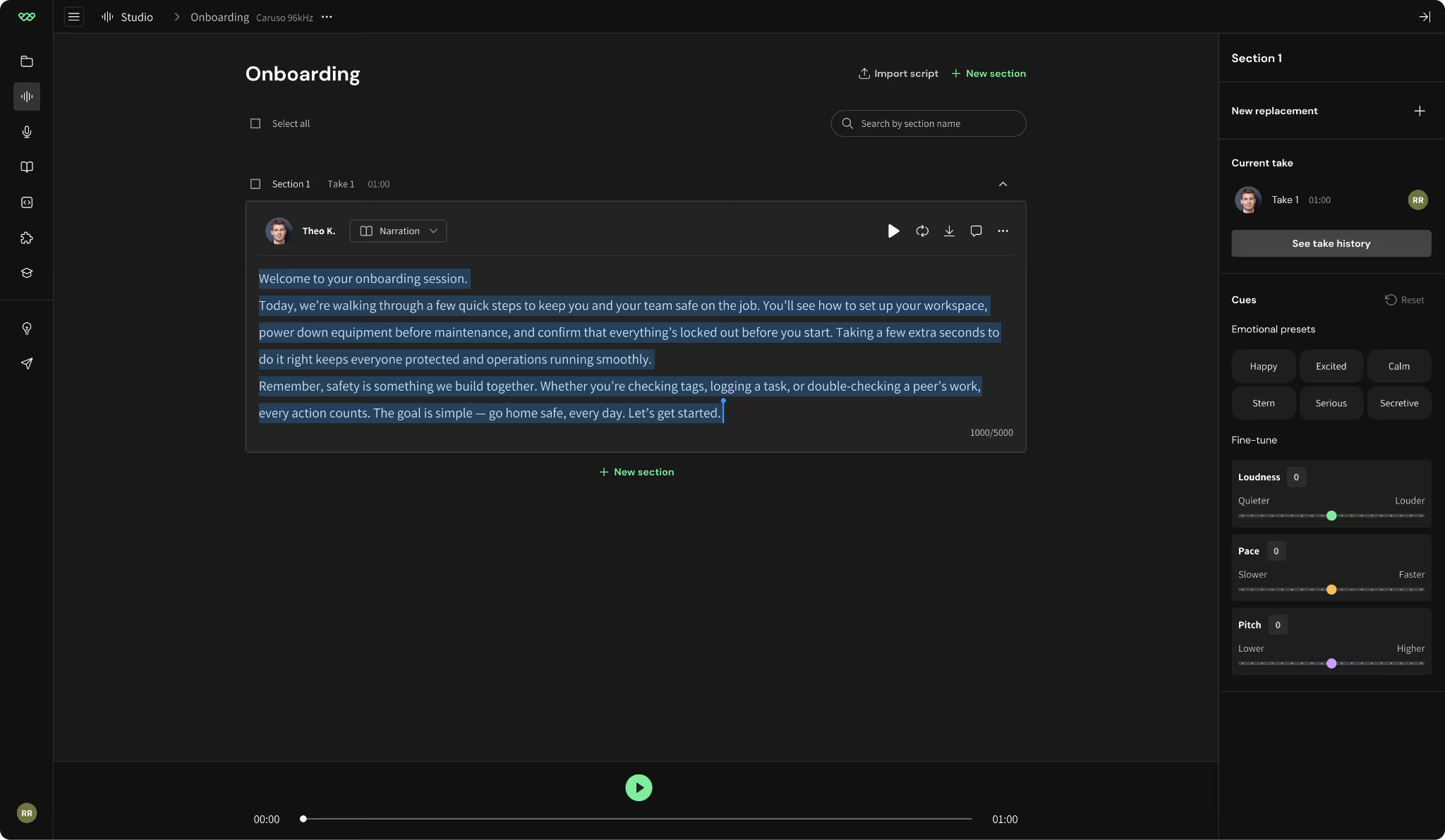
WellSaid supports organizations that produce training, internal communications, and customer education across healthcare, higher education, financial services, manufacturing, and other regulated sectors. Fortune 500 companies adopt the platform for secure voice workflows that protect content integrity, support team collaboration, and reduce exposure to risks such as deepfakes while scaling training & marketing voiceovers across programs.
Best for: Learning and development teams, healthcare training programs, compliance and enablement teams, enterprise marketing and communications
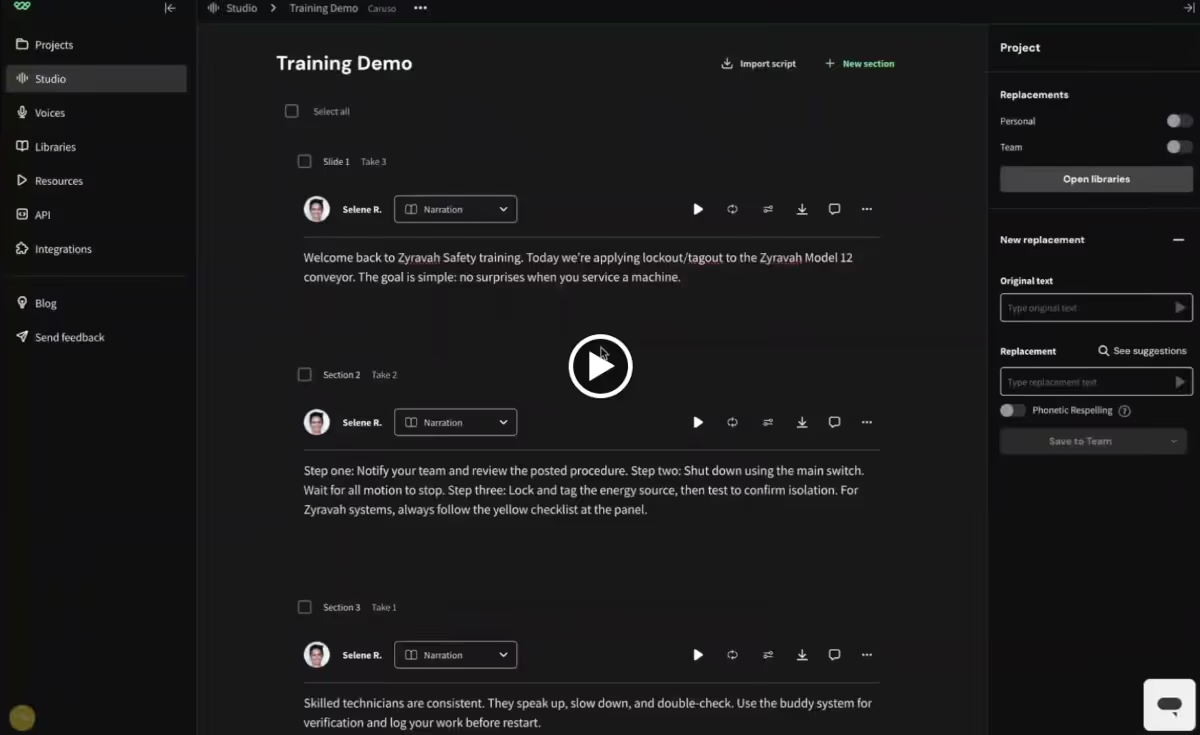
Voice quality and realism
WellSaid delivers realistic voices sourced from licensed professional talent. These models maintain clarity across onboarding programs, compliance courses, and long-form training content, which helps teams preserve a consistent brand sound as materials change across regions and business units.
Pronunciation control
Word-level editing allows precise control over pronunciation, pacing, and emphasis. Teams store brand terminology, regulatory language, and clinical terms inside a shared pronunciation library so every update reflects the same standards. This capability supports scalable L&D workflows and reduces rework during content creation.
AI voice library depth
WellSaid offers more than 120 voices from around the world, with a range of accents and speaking styles. Teams select voices that fit the audience context while maintaining consistency across regions, which supports global reach for training and customer education initiatives.
Trust and compliance
WellSaid operates within a private platform built on licensed voice data. SOC 2 Type II and GDPR alignment, along with dual-layer moderation, protect organizations from misuse such as unauthorized voice replication and deepfake generation while supporting deployment in regulated environments.
Integrations
WellSaid integrates smoothly into modern content creation workflows, including Adobe Express and Adobe Premiere Pro, so voice generation becomes part of everyday content production rather than a separate step. This connection enables faster iteration, smoother handoffs between teams, and consistent output across training & marketing voiceovers.
2. Murf AI
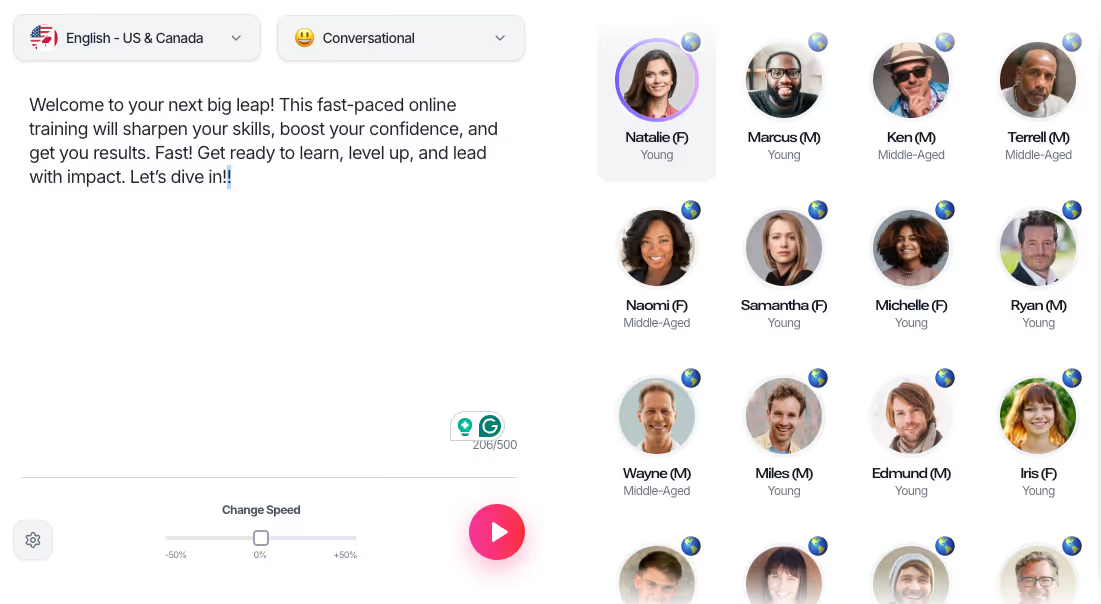
Murf supports creator-focused voiceover production through a polished interface and a broad voice library. The platform suits small teams that publish marketing videos, tutorials, and social content on tight timelines.
Best for: SMB marketing teams and content creators
Strengths
- Clean editing interface that shortens setup time
- Broad selection of voices for short-form assets
- Flexible subscription tiers that fit small budgets
Limitations
- Limited governance features for enterprise deployment
- Lacks private architecture for sensitive workflows
- Less suitable for regulated environments
3. ElevenLabs

ElevenLabs emphasizes emotional expression and voice cloning capabilities. The platform appeals to creators who value expressive delivery for entertainment, audiobooks, and gaming projects.
Best for: Audiobook creators, gaming studios, and independent producers
Strengths
- High emotional range in generated voices
- Advanced cloning tools for custom voice creation
- APIs that support developer experimentation
Limitations
- Voice cloning introduces rights and IP exposure
- Limited compliance and audit tooling
- Not designed for regulated production workflows
4. PlayHT
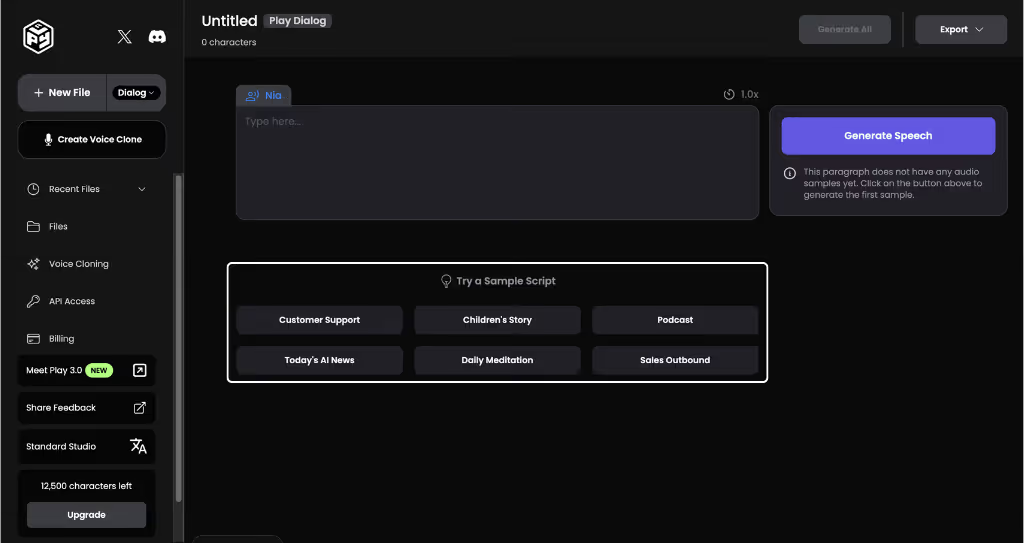
PlayHT positions itself as an API-first AI voice service with automation features, a focus that has made it popular with developer-led teams building voice functionality into digital products. In late 2025, PlayHT was acquired by Meta, which has shifted its roadmap toward platform-scale infrastructure and deeper integration with Meta’s broader AI ecosystem.
Best for: Developers and automation-driven teams
Strengths
- API-centric design that supports embedded use cases
- Automation workflows for large-scale generation
- Scalable output for product features
Limitations
- Limited support for learning and training workflows
- Governance capabilities vary by tier
- Voice cloning features raise rights considerations
5. Lovo AI
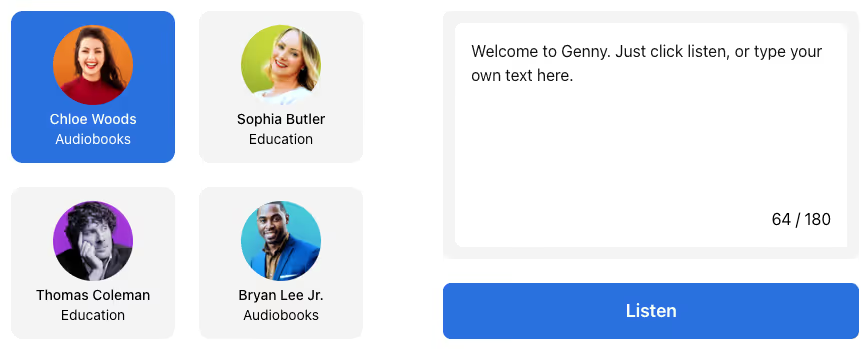
Lovo AI targets social video and advertising teams that value fast production cycles and lightweight content creation tools. The platform focuses on short-form voice generation for creators producing ads, promos, and branded clips.
Best for: Social media marketers and creative teams
Strengths
- Wide range of creator-oriented tools
- Fast turnaround for short-form video assets
- Competitive pricing tiers for small teams
Limitations
- Focus on creator use cases over enterprise deployment
- Limited compliance documentation
- Minimal governance controls
6. Descript
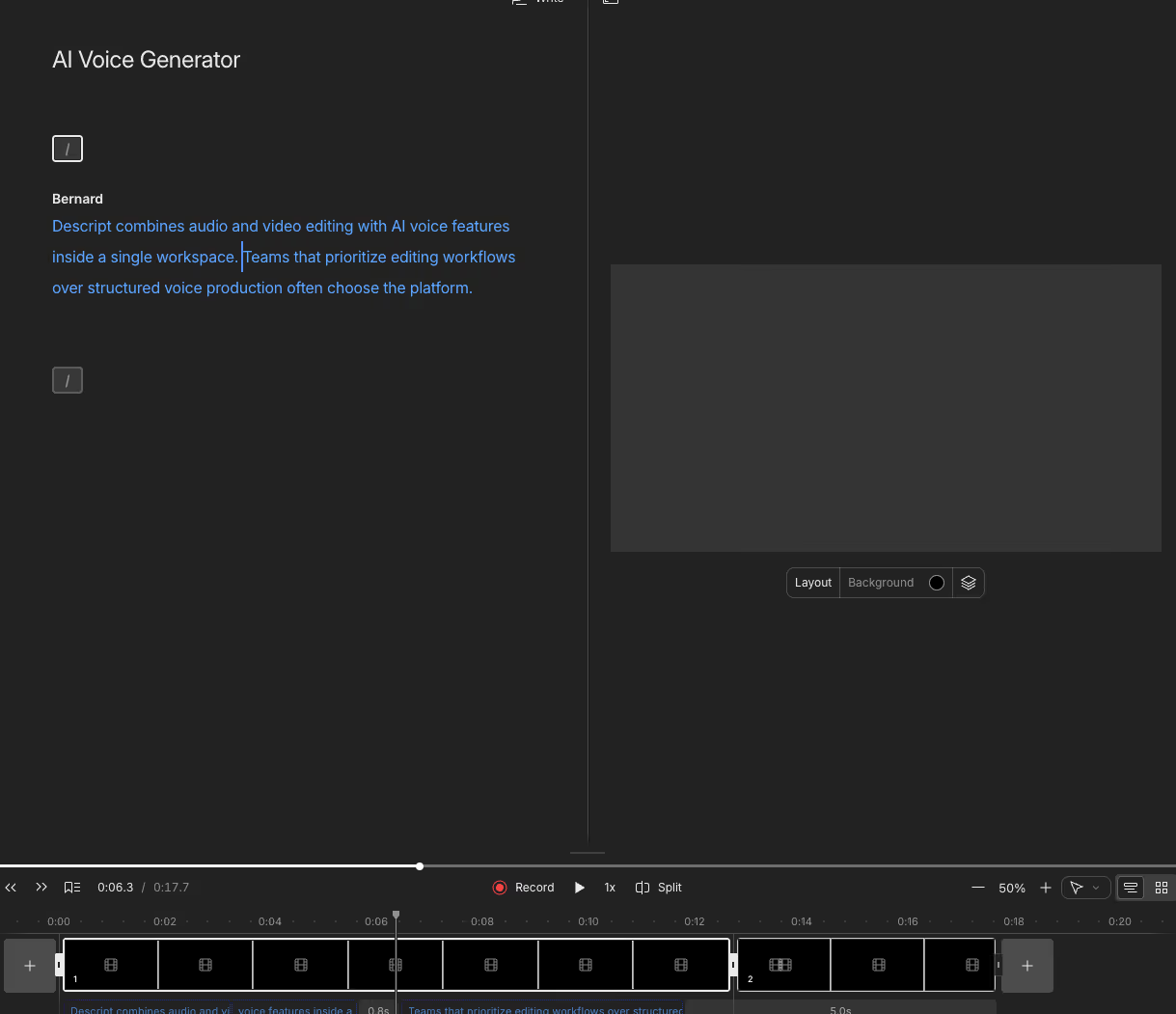
Descript combines audio and video editing with AI voice features inside a single workspace. Teams that prioritize editing workflows over structured voice production often choose the platform.
Best for: Podcast producers and video editing teams
Strengths
- Integrated environment for audio and video editing
- Fast revision cycles for creative projects
- Collaboration tools for distributed teams
Limitations
- Voice generation plays a secondary role in the platform
- Limited security controls for enterprise use
- Not optimized for training or compliance programs
7. Speechify
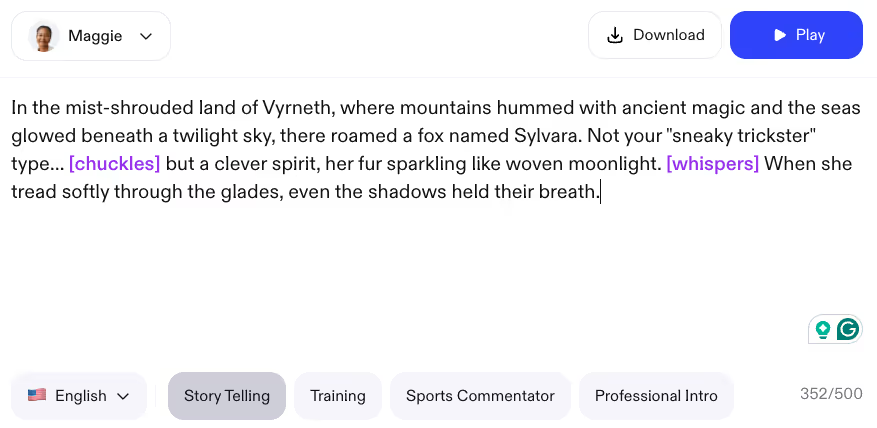
Speechify centers on accessibility and personal productivity use cases. Products such as Speechify Studio and the Speechify AI voice generator convert written text into spoken audio to support reading, learning, and everyday information consumption.
Best for: Personal productivity users and accessibility-focused education
Strengths
- Strong accessibility features
- Simple interface for text-to-speech conversion
- Broad adoption among individual users
Limitations
- Consumer-grade architecture
- Lacks enterprise governance frameworks
- Not built for regulated production environments
How to choose the best AI voice generator for your team
Teams evaluate AI voice platforms through different operational lenses. The right choice depends on how closely voice production connects to daily workflows and how much risk the organization is willing to manage.
For learning and development teams
Training teams work in continuous update cycles as products evolve and policies change. AI voice platforms should regenerate audio quickly when scripts change, so evergreen content stays up to date.
Consider a compliance course inside an LMS. A policy update modifies three lines of narration. The platform regenerates those lines, replaces the audio file in the module, and publishes the update within minutes.
Large learning teams also manage libraries that span hundreds of modules across regions. Voice consistency across languages helps learners recognize a single, trusted narrator even as content expands globally.
For healthcare and regulated industries
Healthcare, finance, and aviation teams operate under strict data-handling expectations. Voice workflows should avoid storing or processing protected health information inside audio systems.
Audit trails record who generated each asset and when changes occurred. Platforms built on licensed datasets and private architectures reduce exposure tied to scraped content and uncontrolled voice replication. These controls support internal reviews and regulatory audits that accompany high-stakes training programs.
For marketing and creative teams
Marketing and creative teams prioritize fast turnaround while protecting brand quality across campaigns, product launches, and social content. AI voice platforms should shorten production cycles for videos, tutorials, and campaign assets while providing a deep voice library that supports regional and tonal diversity.
Voiceover also plays an increasingly important role on social channels. Teams increasingly publish narrated clips on platforms like Instagram, where voice clarity and pacing influence engagement, using AI-generated voiceovers for product walkthroughs, social ads, and micro-learning content that fit native feed formats. These workflows now mirror the same production standards teams apply to short-form Instagram voiceovers inside their broader content programs.
Pronunciation controls and consistent pacing protect message clarity as content volume grows and formats multiply.
For developers and product teams
Product teams treat AI voice generation as a service layer inside automated systems. API reliability matters once voice output becomes part of production workflows. Voice model governance defines how safely those models operate. Platforms that publish transparent controls around data sourcing, rights management, and moderation lower long-term integration risk.
Are free AI voice generators worth it in 2026?
Free AI voice tools attract interest because they remove budget barriers at the start. For personal experimentation, that tradeoff may feel acceptable. Production environments introduce a different risk profile.
What free tools don’t tell you about voice rights: Many free platforms rely on scraped datasets or permissive cloning features. Usage terms often grant vendors broad rights to generated audio or restrict commercial deployment. Teams may distribute content without clear ownership of the underlying voice data.
Data handling: Free tiers rarely explain how scripts are stored or reused. Without private architectures or retention documentation, sensitive material may flow through systems that lack formal security controls.
Output quality limits: Free tools often cap audio length, restrict voice libraries, or degrade quality under load. These constraints appear quickly during long-form training modules, onboarding programs, or bulk updates.
Why enterprises rarely adopt free tiers: Enterprise adoption depends on auditability, contractual accountability, and security documentation. Free offerings typically lack SOC 2 reports, GDPR materials, and formal support agreements.
The hidden cost of AI voice cloning
Voice cloning attracts attention because it can quickly recreate a specific speaking style. That speed introduces risk once cloned audio moves into production systems.
Legal exposure
Cloned voices often reproduce identifiable speech patterns without a clear consent framework. Organizations that publish this content may face potential claims related to likeness rights and unauthorized data use.
IP risk
Scripts used to train or fine-tune cloned models may persist in vendor systems without strict isolation. That persistence raises questions about who controls derivative outputs and whether proprietary material remains protected.
Why regulated industries avoid it
Healthcare, finance, aviation, and government programs depend on documented provenance for every asset. Voice cloning tools that lack licensed data sources, audit trails, or governance controls struggle to clear procurement reviews. Teams in these regulated environments favor platforms that publish transparent voice sourcing practices and operate within private, compliant systems.
The best AI voice generator is the one you can trust
AI voice technology now operates as core production infrastructure. Teams depend on it to support training, internal communications, and customer education at scale. In 2026, buying decisions place trust alongside sound quality. Licensed voice data, enterprise security controls, reliable workflows, and governance frameworks shape long-term value.
WellSaid sets the standard in this category. Fortune 500 companies adopt the platform because it delivers natural, consistent voice output within a private, compliant environment designed for real production demands.
Explore WellSaid to see how enterprise teams produce compliant, high-quality voice at scale.
FAQs
Which AI voice is most realistic?
The most realistic AI voices come from advanced speech synthesis models trained on licensed professional recordings. These systems combine voice synthesis techniques with controls for pacing, breath patterns, and emphasis, which produce human-like voiceovers that hold up across long-form training, digital products, and internal communications.
Where can I get a realistic AI voice?
Enterprise AI voice platforms provide the most reliable output for training, onboarding, customer education, and AI dubbing workflows. Creator tools support short-form projects, but they often lack the governance, pronunciation control, and data practices required for sustained production use.
Can ChatGPT generate realistic AI voiceovers?
ChatGPT does not operate as a speech synthesis or voice synthesis platform. It produces text rather than finished audio files, which makes it unsuitable for teams building conversational agents, AI assistants, or customer service voice applications that require production-grade voice output.
Which AI tool is best for voiceover?
The right tool depends on how voice integrates into your workflows. Learning teams prioritize licensed voices, captioning workflows, and LMS integration for training modules and digital products. Marketing teams value turnaround speed and voice diversity for campaigns and AI dubbing. Product teams focus on API reliability when deploying conversational agents, AI assistants, or automated customer service experiences.
Is AI voice safe for enterprise use?
Enterprise AI voice platforms operate within private environments, rely on licensed voice talent, and publish SOC 2 and GDPR compliance documentation. These controls support secure deployment across regulated industries and protect teams building customer service applications, conversational agents, and AI-powered digital products.
What does “voice” mean in AI terms?
In the context of AI, voice refers to the digital reproduction of spoken language through speech synthesis and voice synthesis technologies. Definitions align closely with standard references such as the Oxford Dictionary, which describes voice as the sound produced in speaking, making it the foundation of modern AI dubbing, human-like voiceovers, and conversational interfaces.


.jpg)
.jpg)